Showing posts with label Hydraulic Tools. Show all posts

Hydraulic Machine and its Key Components

When you need to give compressive force to lift heavy objects, the best device is the hydraulic machine. However, it is also used to cut and punch metal components in industries. As the name suggests, hydraulic machines are run by using liquid fluid power. The hydraulic fluid is diffused all across the parts of the machine into the motors and cylinders, which release pressure due to the resistance and hence the machine delivers huge amount of power. The control valves take care of the fluid / liquid and distribute it through hoses and tubes.

Components of Hydraulic Machines


This article will discuss more about these machines and their main body parts.

  • Hydraulic Pump: The pump is the prime component of these machines as they supply fluid to other parts in the system. The pumps have around ten times more power density than electric motors. These pumps derive power from electric motor / engine and are connected via gears. Some common types of hydraulic pumps are gear pump, axial piston pump, vane pump, radial piston pump etc. The pistons are expensive ones, but vows on durability and also deliver higher pressure and efficacy.
  • Control Valves: The function of these hydraulic valves is to course the fluid to the actuator. The main job is conducted by a neutral spool that intersects the grooves and directs the fluid by sliding from one side to the other. The other parts include pressure relief valves, pressure regulators, sequence valve, shuttle valves, check valves, counterbalance valves, cartridge valves and so on.
  • Filters: Filter is a very important component of a hydraulic machine as it removes the metal particles and other contaminants that are continually produced in the system by mechanical components. The filters can be located between the reservoir and pump, reservoir and return line, and pump and control valves.
  • Reservoir: This is the place where the excess fluid / liquid is collected. It also separates air from the fluid and holds back heat to counter the losses when maximum power is used.

Other important parts of hydraulic machines include actuators, accumulators, hydraulic / tractor fluid, tubes, pipes and hoses. These machines are made of too many components; but the mechanism is as simple as providing power by using a fluid / liquid as the fuel.
Continue reading ...

Pneumatic Tools- Varieties and Basic Advantages

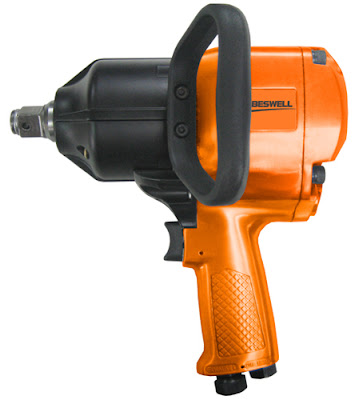
The pneumatic tools utilize compressed gas or air to function rather than electric or any other sources of power. These power tools are available in a range of varieties including different sizes and shapes. Different types of tools ranging from jack hammers to small hand held power tools can be easily obtained from many of the online stores these days.

Pneumatic Tools

Various Types of Pneumatic Tools

There are a wide range of pneumatic tools available which include air sanders, nail guns, jackhammers, wrenches, hammers, hydraulic pump, drills and air staplers. All these tools are available in both standard and commercial models for individual requisites.

Pneumatic screw guns are used to fasten screws easily and quickly. The screws can be loaded to the guns and fastened with a pull of the trigger. The spray painter is another pneumatic tool which uses both paint and compressed air to paint large areas easily. The spray guns have changeable nozzles which can be changed to alter the shape of paint spray.


The air stapler is another type of pneumatic tool which can be used for stapling purposes. The nail guns are used to nail as it is more efficient than manual nailing. These power tools are also used for various other purposes. The air sanders are used to remove rust and other dust particles from the surfaces of automobiles.

The pneumatic pounding tools are used to break hard surfaces such as concrete and stone. Large pounding tools are used to break huge rocks, to dig and demolish rocks and so forth.

The pneumatic and hydraulic tools are considered to be more advantageous than the other types of tools as it is more efficient and productive. As these tools weigh less compared to the electrical tools, it is quite easy to handle and work with the pneumatic tools. Moreover, these tools are powered by compressed air and require no electric power to work. Compared to the other tools, the pneumatic tools are more productive and require less time to perform its functions. Nevertheless, these tools should be used with care and precaution to avoid accidents. Different types of pneumatic and hydraulic tools can be bought online from authentic dealers at reasonable price rates.
Continue reading ...

Hydraulic Equipments & Their Working Mechanism

Industrial revolution accommodates a whole lot of aspects, from ideas to inventions, from unions to possibilities and further. But, when it comes to the wheels on which the industrial revolution rested, it is none other than the aspect of movement. Movement is force, energy, mechanism etc. One such powerful modes of movement, falls under the broad category of hydraulics.

Hydraulics is the study and usage of mechanical properties of a host of liquids. Often dubbed as fluid mechanics, hydraulics like other mechanisms can be used for the generation and control along with the transmission of power, via the utilization of pressurized liquids (fluids).

Hydraulics is a very useful branch and is instrumental in a variety of aspects; some of these aspects are listed as follows:
  • Pipe flow
  • Design of dams
  • Fluidics & fluid control circuits
  • Pumping solutions
  • Turbines
  • Log splitters and construction equipment
  • Hydropower aspects
  • Braking systems
  • Cranes, loaders and other equipment
  • Computational fluid dynamics
  • Flow measurements
  • Irrigation and related fields

The scope of hydraulics is seeing a new face with a rigorous round of research and development still going on.

Machines which operate on the hydraulic mechanism are referred as hydraulic equipments (often called as hydraulic machinery).

The basic principle of all hydraulic mechanisms is about a force that is being applied at one point and getting transmitted to a different point with the help of an incompressible fluid. This force or thrust gets multiplied during the process. The simplest of hydraulic systems and even the most advanced hydraulic sectors utilize this basic working module to operate. Oil is the most commonly used incompressible fluids in any kind of a hydraulic setup.

Hydraulic Equipment Parts
Hydraulic systems utilize pistons, cylinders, valves and hydraulic pumps (pumps supply high pressure oil) for functioning. In the simplest of designs, at least 2 cylinders, one being the master cylinder and the second being a slave cylinder (cylinders have pistons working inside them) are used. But, the functioning can be altered to have multiple slave cylinders to be run by a single master cylinder.

The common car braking system utilizes as many as four slave pistons, one fitted near each wheel apart from a single master cylinder.

Hydraulic Multiplication Factor
Another important concept in the working of hydraulic equipments is the multiplication factor (force multiplication). As the multiplication factor is responsible in terms of the output and capacity, there are many mathematical formulae to determine the multiplication factor.

No doubt, most hydraulic systems use oil for operation, still the set-up requires a decent haul of maintenance and inspection. All in all, with its capacity and scope, hydraulic mechanisms have been the basis of many modern systems.
Continue reading ...

What Are Different Pneumatic and Hydraulic Tools Used For

Fluid mechanics forms the basis for pneumatic and hydraulic tools that are useful in a number of applications. While pneumatic tools work on the application of pressurized gases, their hydraulic counterparts are designed using mechanical properties of different liquids.

While pneumatic equipments are useful for general applications, hydraulics is the basis of heavy tools and machinery. Various tools designed using pneumatics are simple in design as well as control. On the other hand, the hydraulic components form a part of complex machinery used for heavy works.

The use of these two categories of tools has eased the amount of efforts required in various applications. Some of the most popular pneumatic tools are air wrenches, hammers, drills and chisels. Besides, there are many other tools in this category and some of them worth mentioning are sanders, grinders, paint sprayers and cutting tools. One can find the use of these tools in work at various types of industrial workshops.

Hydraulic tools are much more advanced and complex as compared to the tools that work on the principle of pneumatics. Hydraulic lift jet pump is one of the best examples of tools in this category. This type of hydraulic pump is mainly used in drilling oil from ground. Positive displacement pumps are other popular tools based on hydraulics and they are used in applications that require high liquid pressure. The food refining industry makes use of centrifugal pumps which too are based on hydraulics.

When compared to mechanical tools, the hydraulic and pneumatic tools offer a number of advantages. To begin with, these tools have less initial as well as operating costs as compared to mechanical tools. Even the cost and efforts for maintenance of these tools are significantly lower. At the same time, these tools are highly efficient and have higher working capabilities.

Pneumatic and hydraulic tools are usually quieter in operation as compared to mechanical tools. Moreover, these are compact tools and require less space for storage. As they don’t require electrical power for operation they are safe and save energy. All these advantages make these two categories of tools widely usable in different industrial applications.

Continue reading ...

Pneumatic And Hydraulic Tools And Equipments

For accomplishment of numerous indoor and outdoor tasks the performer requires to use various tools. Such tools on the other hand require power for proper functioning. Hydraulic and pneumatic tools are most common among the machines required by people all around and their large scale demands make them highly plausible object for carrying out business.

Understanding the Differences
For achieving success in the business of pneumatic and hydraulic tools an entrepreneur has to realize the basic difference between the two and their respective uses. Target customers would be different for the two and realizing the difference will help build up effective strategies for winning the attention of the target group of customers.

Tasks Accomplished by the Tools
Divergent types of tasks like lifting, pushing, rotating, pulling, turnning around, moving, lowering, joining, breaking or carrying loads can be accomplished by use of pneumatic and hydraulic tools though the two work on different principles. While hydraulic tools work on mechanic forces generated by pressurized fluids, pneumatic tools are based on gas as source of power. Again, the former is used mostly for automated works and the later as hand tools.

Target Buyers
Industrial units as well as those looking for automated tools in domestic works would prefer buying the hydraulic tools. On the other hand for more personalized domestic tasks and in small workshops and laboratories, pneumatic tools would be ideal asset. Accordingly the target buyers for pneumatic and hydraulic tools would also be different from each other.

Hydraulic Tool Buyers
People looking for pressing, stamping, or rolling work would prefer hydraulic tool. Such tools are ideal for steel mills, fabrication industries, automobiles, and air crafts for use in brakes, lifts as well as control surfaces.

Pneumatic Tool Buyers
Owners of assembly as well as fabrication installations will always prefer pneumatic tools. Hammers, drills, and chiesels are tools in demand and they come up very handy for maintenance, garage, and hangar works. Pneumatic tools usually work at lower pressure in comparison to hydraulic tools.

Some consumers may prefer to buy both pneumatic and hydraulic tools. While the former is cheaper, they are also less durable. Life span of pneumatic tools are in the range of 5-10 years while that of the hydraulic tools are around 15 years.
Continue reading ...